




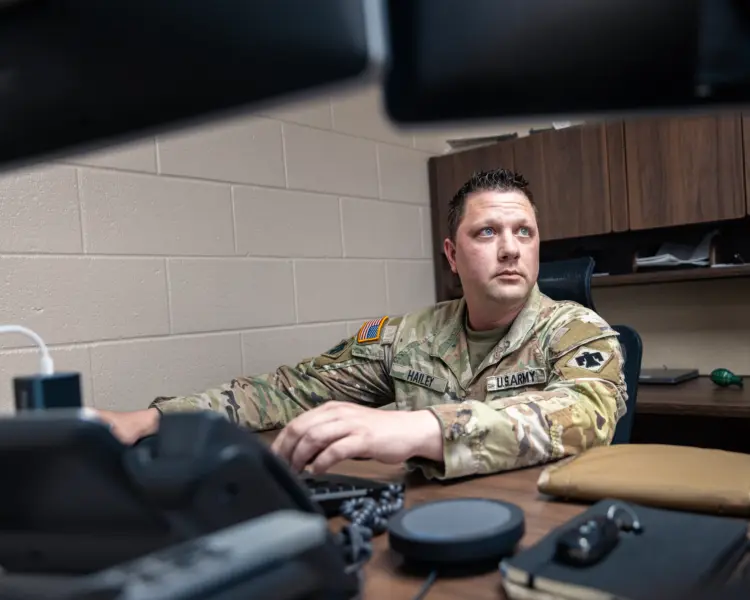
With 20 years of service in the Oklahoma Army National Guard, including deployments, training and other active-duty activations, Staff Sgt. Herbert Edsel “Eddie” Hailey III says it would take somewhere in the ballpark of three and a half hours for personnel and administrative staff to comb through his National Guard Bureau Form 23 (NGB-23A) line by line and accurately calculate his eligibility for certain awards.
“The longer you’re in [the National Guard], the more complicated your NGB-23A is. The more complicated your record is, the more time it takes to manually calculate,” explained Hailey, who is the automation NCO for the Oklahoma Army National Guard Recruiting and Retention Battalion.
Now, with an artificial intelligence (AI) tool Hailey created during a two-day AI Readiness Lab earlier this year, scrubbing the NGB-23A takes seconds.
























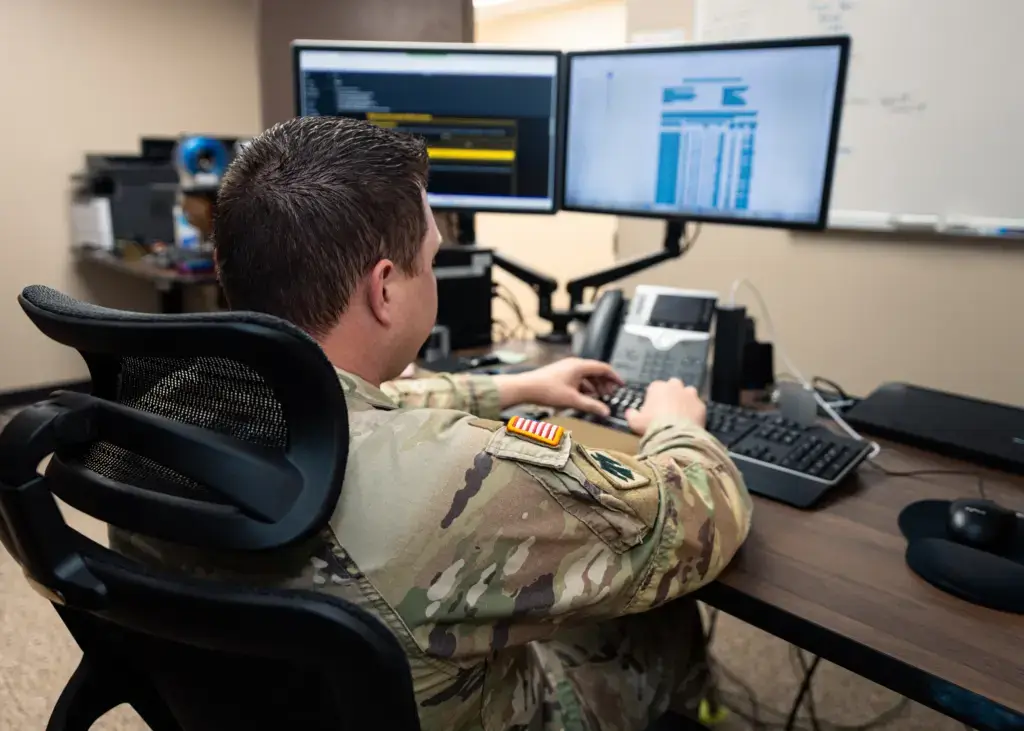 The problem Hailey set out to solve wasn’t unique to his battalion. He described a backlog of time-and-service awards across the National Guard because of the time-consuming nature of the task. The data to do the math faster already sits in Vantage, the U.S. Army’s data analytics and decision-making platform. What was missing was the know-how to put it to work. That is the gap the lab was built to close, says Corbin Fonville, founder and CEO of Skillquest, the Oklahoma-based AI and coding education company that operates it.
“What we’ve found, even with colonels and two-star generals, is that the experience for them is better if we actually throw them in the deep end and ask them to, just for a moment, try to build something [using AI],” noted Fonville.
The lab opened with a walkthrough of Vantage and a set of starter prompts in a workspace called the AI Forward Deployed Engineer (FDE) before participants were turned loose on problems of their own. Hailey and fellow Guard member Chief Warrant Officer 2 Krissie Hunt, who is on the battalion’s admin and personnel staff, picked the awards backlog as the challenge they wanted to solve.
“It was [Hunt] and her shop’s idea,” he explained. “I just happened to be the driver on the keyboard.”
Hailey gave the AI plain-language context about what an NGB-23A is, sample dates, and the service codes that count toward particular awards. Ultimately, the tool he created reads a service member’s NGB-23A, identifies qualifying years of service, and determines eligibility for awards in a fraction of the time. It has been credited with potentially saving more than 61,000 hours of admin work for personnel staff.
After creating the prototype, manual validation was key to the process, Hailey said, adding that Hunt and other admin experts calculated and cross-checked the results. He also had other people throughout the organization run their own data through the AI tool, which resulted in correct calculations.
“It’s not extravagant. It doesn’t have a lot of bells and whistles,” Hailey said. “But it’s very effective, it’s quick, it’s repeatable, and it’s verified.”
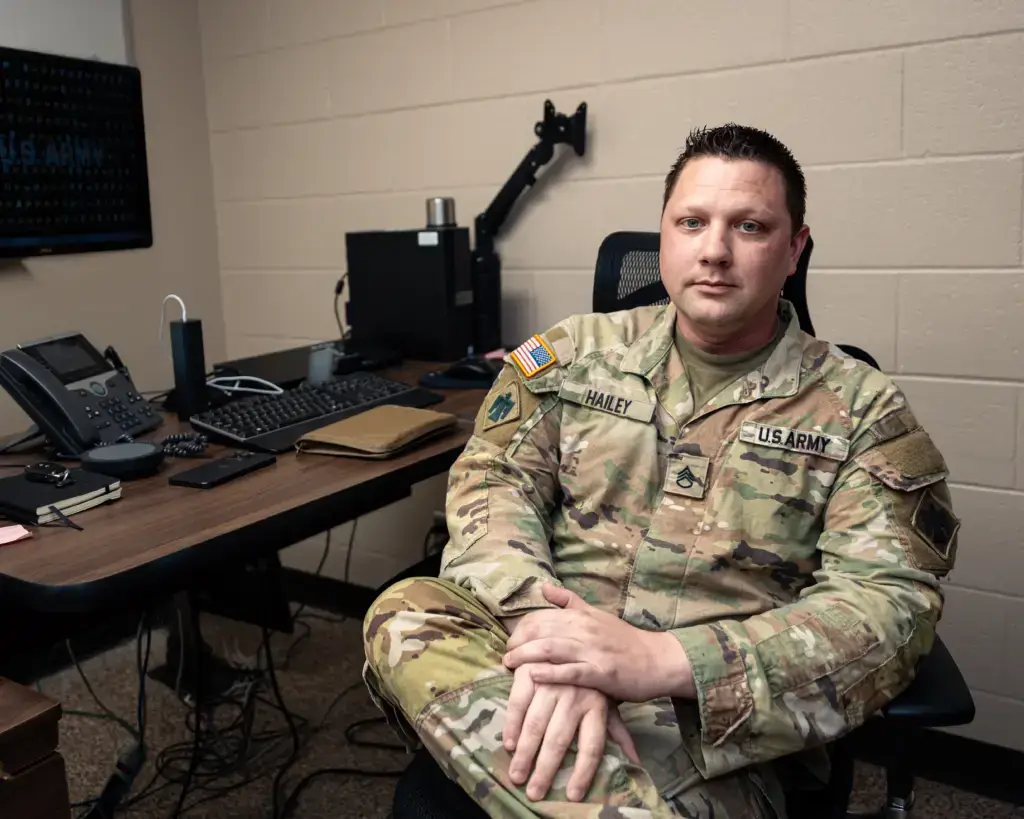 This use case of AI is another example of the technology being deployed to optimize efficiency, which both Hailey and Fonville noted extends to concepts of soldier morale and retention for the nation’s Armed Forces. “Using AI in some form to create more impact and more readiness” is the goal of Skillquest’s two-day lab with the National Guard, says Fonville.
Hailey encourages other Guard members who may be hesitant to dive into AI to take initiative and try to use it for the same problem-solving capabilities that his team did.
“Either you’re going to do it, someone else is going to do it, or it’s just not going to get done,” said Hailey. “I’m sure people have thought about an awards calculator, and now we have a proof of concept, and it’s become successful.”
Hailey’s hope for the AI tool is to take it from its current proof-of-concept state into broader adoption. He says the plan is to finish the rollout in the Recruiting and Retention Battalion so one unit can serve as the model, then potentially take it statewide.
“Change is something that takes time,” Hailey says, but having already received recognition from the adjutant general for Oklahoma, Maj. Gen. Thomas H. Mancino, his AI tool could be on a fast track to supercharge S1 capabilities.