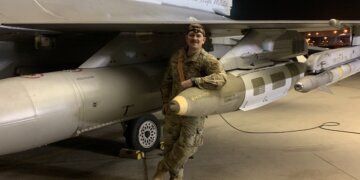





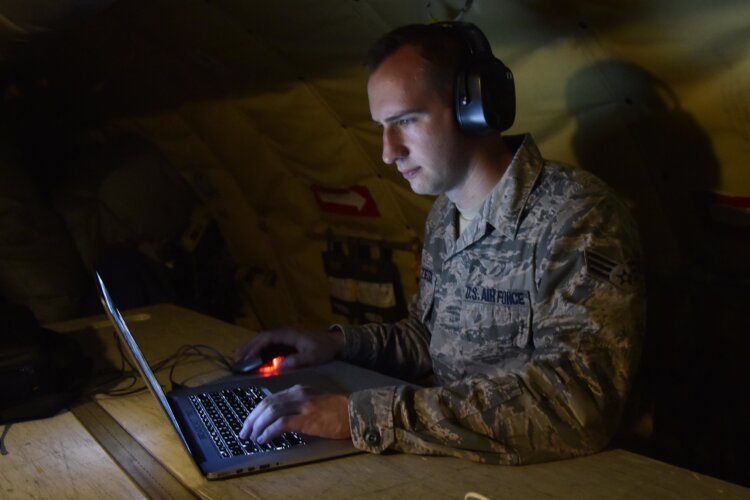
While there are no exact figures on how many service members pursue a college education during their career, reporting by Forbes in 2025 reveals roughly 25% of active-duty personnel use tuition assistance for more than 665,000 courses each year. Education benefits continue to be a leading reason behind military enlistments, as well.
Military-affiliated students often fall in the category of non-traditional students because they are not solely focused on a degree path. It is not uncommon for a service member to juggle military and family obligations, along with college coursework. It’s also not impossible to succeed at all those things at once, experts say, but there are strategies to follow.
The advising team at Service to Service (S2S), a nonprofit that “provides free college and grad school application counseling to military veterans and servicemembers,” shared that it all starts with communication.























“It’s helpful for schools and professors to set their expectations accordingly if a student has an active military obligation. The only way for a professor to fully understand your military commitments is if you tell them. Be proactive, thoughtful, and clear in your communication. We find that schools that are veteran ready are understanding of these kinds of interruptions and work with the student to make sure they are still able to complete their coursework while being a servicemember,” the S2S advising team said in an email response.
READ MORE: Don’t leave money on the table: Making the most of your Army National Guard education benefits
It is among the reasons why finding a school that is the right fit matters, the S2S team added, which can be signaled if it has a “dedicated Veteran Center.” This often means a full-time staff that can include workers or volunteers with a veteran background.
Desiree Butts, president of the Council of College and Military Educators (CCME), agrees on the importance of communication and recommends establishing rapport early on with instructors and the designated advisor — especially when it comes to military deployments.
“I think that’s one of the key things of being successful in your course, because if they know that you’re deployed, they can help set expectations on both sides to say, ‘OK, this is what I’m going to do,’” Butts explained. “A lot of instructors that I have worked with previously on a student’s behalf, they will, once they know that that student is deployed, is going to deploy, then they sit down and come up with a plan with them.”
She added that this approach helps with establishing expectations, like an instructor will understand why you can’t attend a Zoom class session. Further, instructors may be open to customizing plans with the student’s restrictions in mind.
Butts’ other suggestions on steps to take before a deployment:
- Contact your professor(s) and advisor to alert them to your deployment (they may require a copy of orders if they are making any adjustments to your submission dates)
- Download relevant course materials in case connectivity is an issue
- Use your course syllabus to put assignment reminders and deadlines on a calendar
- Make sure your devices have any required programs, including Microsoft Office
To connect with other military-affiliated students, CCME’s Butts recommends researching your school’s Student Veterans of America chapter, which offers camaraderie for other non-traditional students with a military/veteran background.
Tips from S2S on taking courses while in the military:
- Be thoughtful about your academic course load. Know yourself and your limits. It is better to take fewer courses and do well in them, rather than overload yourself and struggle with your grades.
- Be thoughtful about the courses you select. If you are planning to continue your education and work towards a degree, try to take high level courses in an area related to your future academic interests. This is a great way to show your strength in coursework relevant to your future education.
- Do research on the institution you select. Some colleges, both in-person and online, offer more reputable programs than others. Use resources, like the College Scorecard and the GI Bill Comparison Tool, to evaluate different programs. Ask questions like: What are the graduation rates? What is the program cost and do they take Tuition Assistance? Be thoughtful about where you enroll to ensure that you are investing your time and money into a program that will yield returns.