


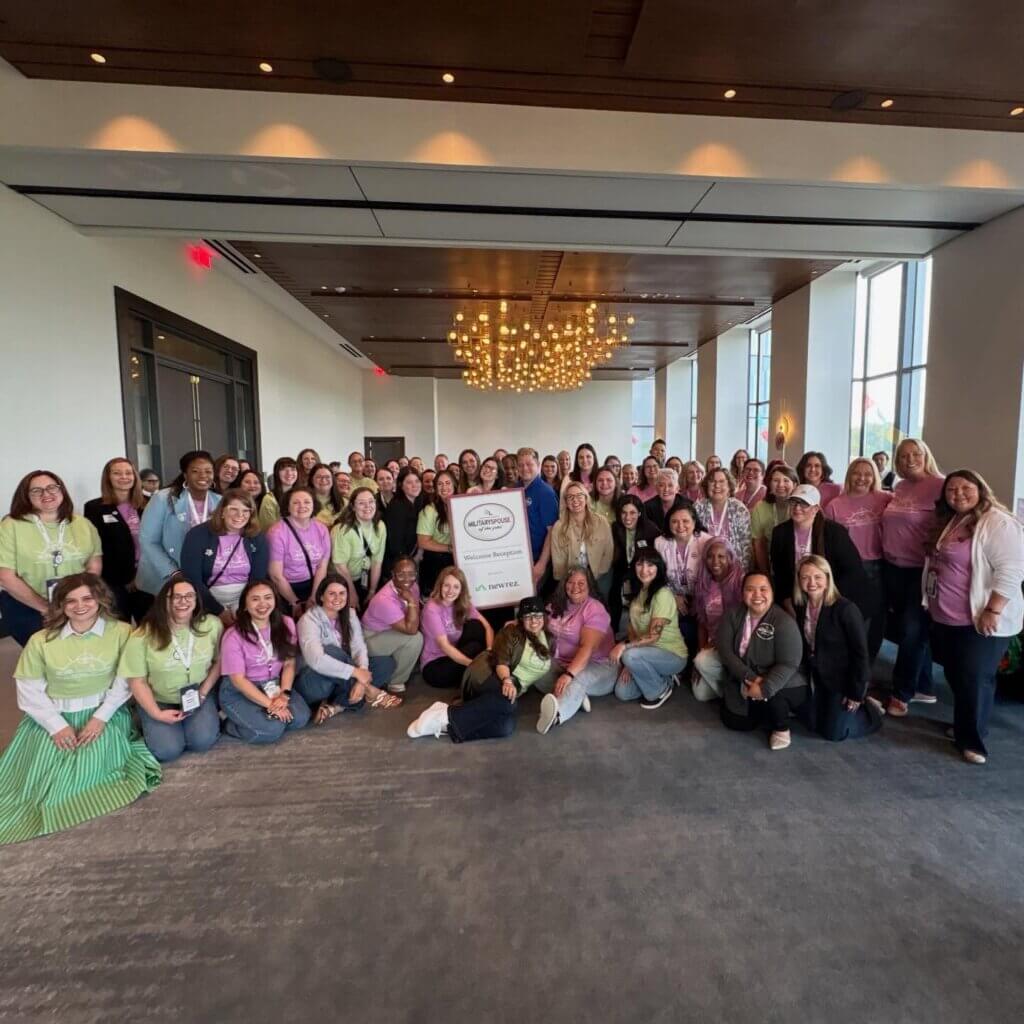
Twenty percent of the Joint Force continues to accomplish dual missions at home and abroad with just 4% of the Department of War’s budget and far less resources, National Guard advocates say. Four military spouses from the 2026 Military Spouse of the Year® (MSOY) program have stepped up to fill that gap of support, while sharing their own experiences to remind Americans that members of the reserve component are being tasked far beyond one weekend a month, two weeks a year.
Stepping up to care for their communities when resources fall short, Nicole Gebhardt, Kendra Stephens, Erica Thompson, and Randall White are National Guard spouses who were nominated for the Armed Forces Insurance MSOY award for their advocacy. Their platforms range from providing financial literacy for young service members to fighting for safer privatized housing for military families.
“Everybody thinks that we’re just weekend warriors … it’s not just like that. We are just like all the other branches, constantly moving, constantly going, the deployments, the TDYs, all the things,” said Gebhardt, who lives in Alaska and is the overall National Guard Spouse of the Year. “And I think we get put in this different little category, which really isn’t a fact … we are just like the other branches.”
























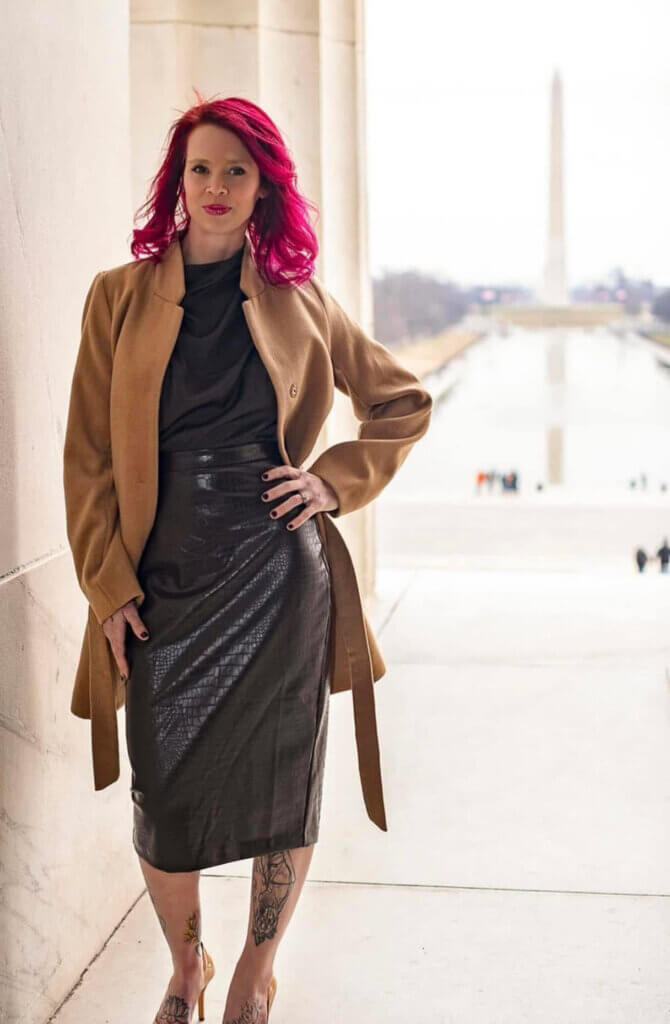
“And it does vary by state,” added Stephens, AFI Utah National Guard Spouse of the Year. “But you know where I am, we’re on a regular deployment schedule. And I think nowadays, most people are on a regular deployment schedule who are in the Guard … so that’s a big misconception that, you know, we’re just civilian soldiers.”
“National Guard families are unique in that we sort of have the same expectations for mission readiness… it’s 4% of the Department of War budget, but we are 20% of the joint force capability,” said Thompson, AFI Alabama National Guard Spouse of the Year. “Our spouses are relied on to do the same mission, [but] Guard families have a little bit less resources for support,” she said, giving the example that at some bases, the dining facilities are not always open.
As first an Army Reserve spouse before her husband joined the Air National Guard, Thompson went on to describe a variety of Guard deployments: border patrol, training, natural disasters, or civil unrest missions in cities like Washington, D.C.
“All of those are unique, and families, hopefully, are plugged in and have the resources within the communities as well, just to have that same support, even though we don’t always have the same resources as active duty,” Thompson said.
Community connections
Stephens’ extended family understands what it means to serve in the National Guard. For 22 years, including a deployment, her husband has served in the Utah Guard, just as his father, brothers, sister and grandfather before him.
“He comes from a long line of National Guardsmen … they’ve all been Utah National Guardsmen, so they’re very proud of that,” she said.
An advocate for the military community, Stephens has long looked beyond a member’s rank and service if they come to her for help.
“My platform has always been more to fill the gap that military families fall through, no matter what your rank is, no matter … if you’re active or reserve or a guardsman,” she said.For the past couple of years, Stephens has focused her efforts on the Hill Air Force Base Airman’s Attic, creating community connections to support military families facing food insecurity. Citing the 2025 government shutdown when the food pantry saw a 450% increase in usage, which Stephens described as alarming, but the “community came together.”
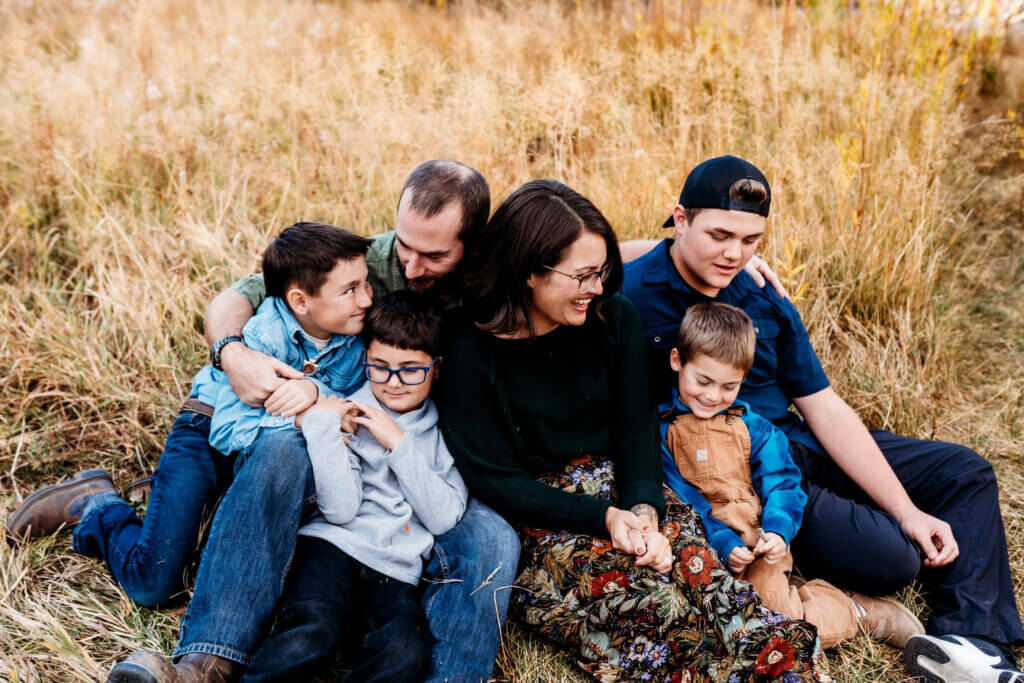

Stephens works to not only support military families with groceries, but also in teaching life skills. She is open about her own misunderstanding of finances when she was younger, and now strives to be the person she needed during that time.
“I grew up fairly sheltered and so I didn’t understand financial management. I didn’t understand how to really, you know, make food in the way that you need to make food for a small family in order to budget it, and that comes from a place of privilege,” she said. “[I] went into adulthood without truly understanding how to manage those basic life skills.
“You find that a lot of people who enter the military don’t have a lot of basic life skills yet because they’re so young … so what I do is I find these community partners, and I can teach you to cook. You need to learn how to cook? I can have somebody who can teach you how to cook. If you need help grocery planning, I have someone, or myself, or anyone on our team can help you do that,” she explained, stressing that her mission is “destigmatizing asking for help.”
‘Everybody’s plan is different’
Asking for help is not an easy thing to do, especially when it comes to money, so it can be easy to simply financially mirror everyone around you without asking the hard questions. However, as a certified financial planner, White, AFI Mississippi National Guard Spouse of the Year, advocates the need for financial literacy for young military members to set them up for success. Even though a service member’s income may be the same as their battle buddy, each military family has its own needs, which means an individualized approach to finances is required.
“The thing that I teach in my finance classes is, everybody’s plan is different. You can look the same on paper, but behind closed doors, [you] are not the same,” White said, explaining that she routinely advised veterans and soldiers against using their peers as examples for what they should do.
“… I’m like, your battle buddy has four kids that are under the age of five … it’s just a different situation,” she said.

Murphy’s Law and unit support
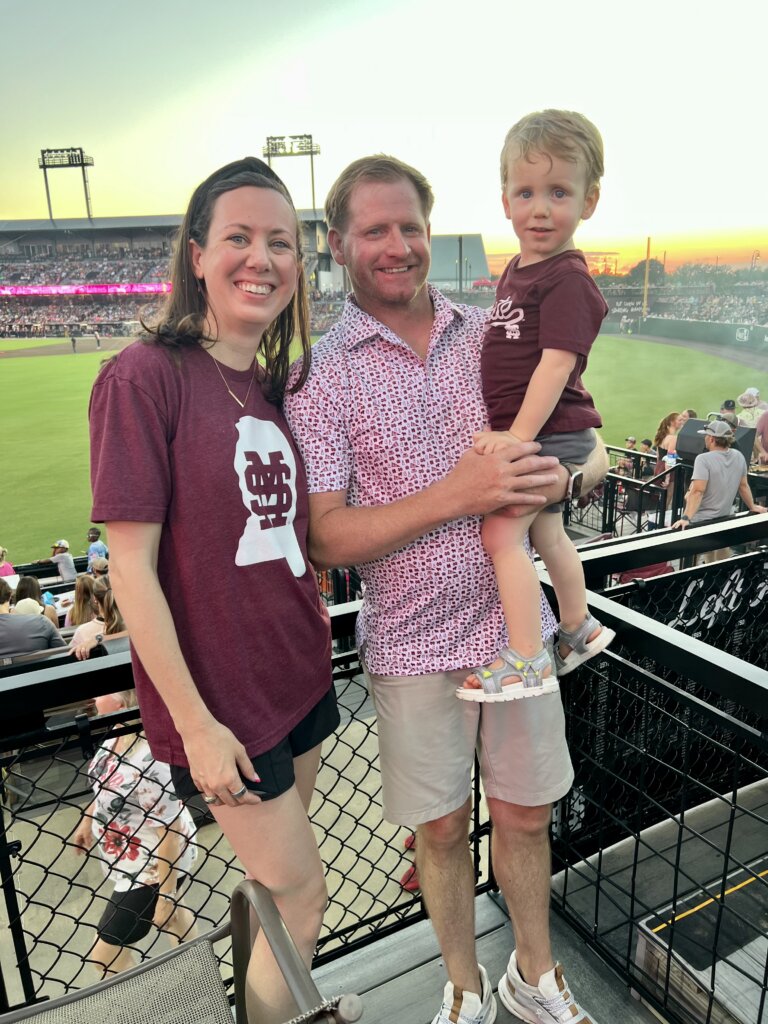
White, whose husband has been in the Guard since 1998 and is Active Guard Reserve with the Mississippi National Guard, understands that even with the best-laid plans, Murphy’s Law (“anything that can go wrong, will go wrong”) still comes into play when the service member leaves.
“I think all of us as spouses can say when deployments happen, when it rains, it pours,” White said.
She shared that one deployment was especially difficult. Her father went into hospice, and she needed to relay the news to her husband since “[he] and my dad were very close.” It left her dealing with not only her emotions but his as well.
“But the support we got with the Guard was that I had his command reaching out, the spouses of his command reaching out … just knowing that they were there [helped],” White said. “We kind of feel helpless in those situations, because there’s really nothing you can do but just be a shoulder, but having those shoulders around us was very comforting.”
She explained that because the unit was made up of service members based in different states, she had people from all over reaching out to care for their family during that time.
“It was near and far of having that support, so it was just very comforting during that situation.”
READ MORE: Trio launches new homefront podcast for National Guard families
Navigating grief and trauma
Gebhardt, chosen as one of the seven branch Spouses of the Year, has committed herself to being the support for other military families experiencing grief and trauma. After losing her firstborn son Samuel in 2009 when he was nine weeks old, and then having two miscarriages, she made a promise that she would care for military spouses who were also navigating child loss.
In the last 13 years, the Gebhardts have moved nine times, and as they move roughly every two years, she plants community everywhere she goes.
“Each move, we’re building a complete new support system, new schools, new community, new neighborhoods, new friends, new everything. And so I know each time we move, the first thing I need to do is start reaching out and building that community,” she said.
Gebhardt’s husband Jeffrey has served in the military for 28 years, first in the Air Force before joining the Guard to fly C-130s. When he called from the Pentagon to tell her they were moving to Alaska, she initially wanted him to geobach until learning more about the installation.
“In Alaska, they never had a pregnancy and infant loss support group … I knew that we couldn’t get to Alaska fast enough. And now, each time we PCS, I start a pregnancy and infant loss group. I’m with these women every day. I want them to know that they’re not alone, and I want them to know that they can heal, and they can feel beautiful and worthy and love their life again after experiencing child loss,” Gebhardt said.
“1 in 4 women have experienced some kind of pregnancy loss, miscarriage, stillbirth, and it’s rampant in the military as well. And I want to be that voice so these women and these know that they’re not alone, and know that if their spouse is away on a deployment or a PCS, or whatever it may be, that we can lean on each other.”

A push for safe housing
A military spouse of 22 years, Thompson is the military families liaison with the Change the Air Foundation, and her advocacy is safe privatized housing for military families.
“Everybody’s affected by military housing who’s living in them, and so being able to provide them with some resources has been really great,” she said.
Active Guard Reserve families like hers can have the opportunity to live in military housing in certain cases, and she explained what that was like when they first moved onto a military installation.
“It was kind of cool seeing the worlds of Guard families and active-duty families, you know, living on the same street, because there is a cultural difference between the two,” she said of her experience living on a military installation for the first time. “So it was really neat to connect with active-duty spouses and share sort of the Guard world with them and let them know [that there are] a lot of misconceptions.”
“It was really cool to be that face for them to go, ‘oh, wait, they’re just like us.’”