


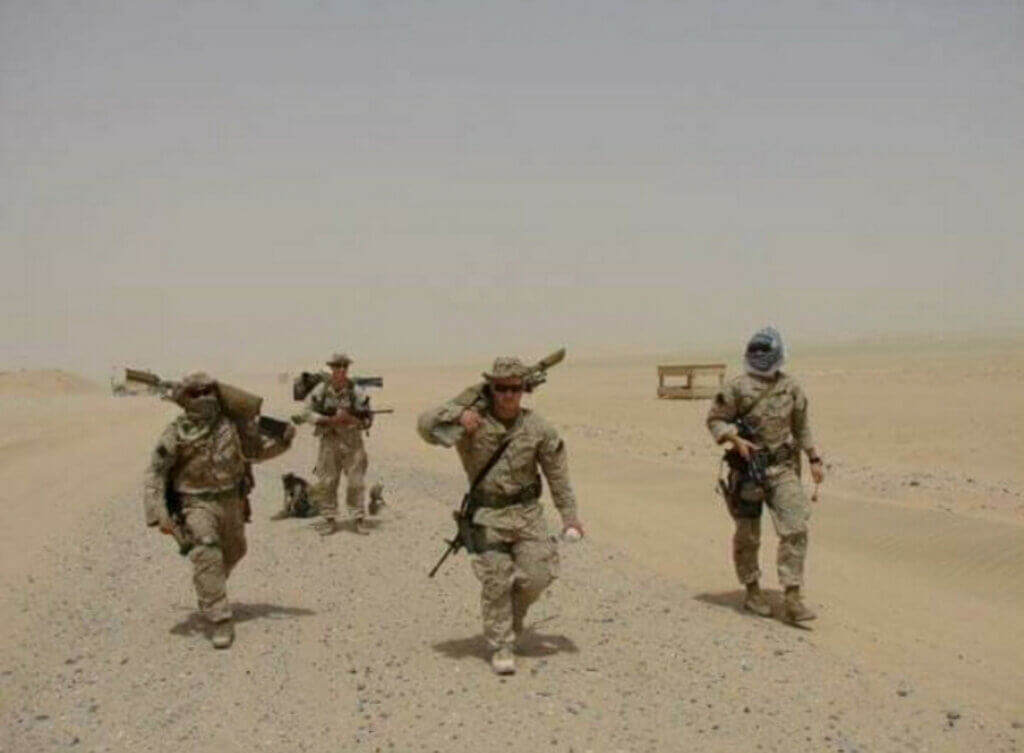
A continuous volley of airstrikes, looming deployments of the American military, and casualty updates about the loss of seven service members and countless wounded supporting Operation Epic Fury have veterans like Casey Talley taking a very different approach than they did in the early 2000s.
Talley pointed to the climate of two opposing beliefs in the nation, and said it is important for people to understand more than one side.
“Regardless of where you’re at, take a step back,” he said. “Inform yourself, educate yourself about everything from the history of why the conflict exists in the first place.”















Talley joined the Marine Corps in 2007 and served until 2021. He saw the difference a military presence in the Middle East made for people in real time.
“We spent a lot of time in Sangin and Nowzad [Afghanistan], and it was a pretty violent time period in 2010 and ’11,” Talley said.
Talley highlighted the grand opening of a school for girls during a deployment, and what that accomplishment meant to him. He pointed out that now that same culture is back to not allowing girls to go to school.
“So, I wonder, are we going to end up in another similar situation?” Talley told Military Families Magazine.

‘Back into that mindset’
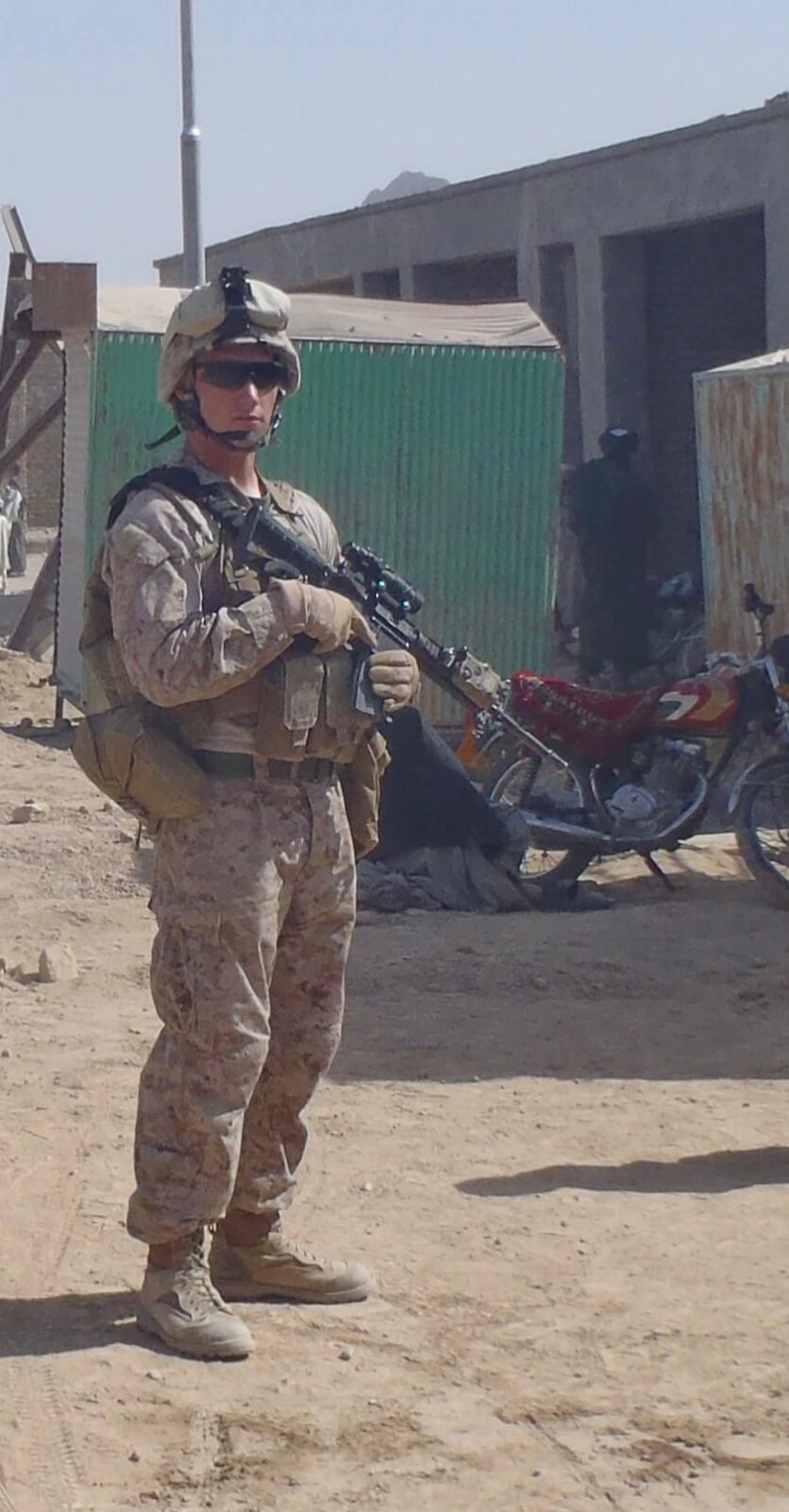
As an Army Reserve soldier, Eric Evans said that after hearing news about the conflicts and deployments, he felt a “weird sense of FOMO” (fear of missing out).
“It’s like you don’t want to miss out on something important, or feel like you didn’t do your part,” Evans said.
He and other post-9/11 veterans have been to the very places that once served as peaceful transition sites and are now facing combat action.
“It definitely pulls you back into that mindset,” said Evans, a captain with roughly 13 years of military service, including a deployment to Afghanistan by way of Kuwait. “It’s crazy. I’ve been there. I know exactly where that is, that building.”
Talley said that most Americans can’t point to Iran on a map, but suggested that when judging the situation, they should separate the warfighters from the politics and decisions made by the country.
“That is what we have to boil it down to; the country has made this decision in a way, and again, leaving politics out of it, I’m not debating the War Powers and this and that, and who can do any of those kinds of things, but if you don’t like it, get more involved,” Talley said.
Marine Corps veteran Justin Governale shared that while he doesn’t support new conflict, he does support the troops and them coming home.
“At first, I was like, ‘F— this sucks,’ but the more it’s happening and the more we just decimate, I’m like, ‘You know what? There’s a lot of decisions that are made over my head that I don’t understand. I’m just a dude that served f—ing 20 years ago.’”
Governale said he got out of the service in 2008 after two deployments to Iraq.
“To be honest, as much as I read into all this stuff, I don’t know what the f— is going on, right? None of us really do. I’m just hoping that it’s in our best interest. I don’t want to see another full scale war. But on the same token, everyone that swore in swore to commit to their service. Whether they want to be there or not, I support them. And, I hope we f—ing win. I just don’t like seeing any time a service member gets killed. My heart feels heavy.”
Governale recalled the devastation he felt hearing not only about the casualties from the withdrawal from Afghanistan in 2021, but that one of them – Marine Lance Cpl. David Lee Espinoza – was from Rio Bravo, Texas, near Governale’s hometown of Laredo.
Governale attended the fellow Marine’s funeral service.
“They played the Marine Corps hymn on the trumpet, and it started off slowly, and everybody, by the end of this hymn, everybody was at the top of their lungs singing the Marine Corps hymn out of respect for a fallen service member, for a Marine,” he said. “That was such an impactful moment.”
As a father to a 1-year-old son, Governale said he has a mentality of “if I don’t do my job, my son will join the Marine Corps” for lack of direction in life. Yet, at the same time, he reflected, “if I do my job, my son will join the Marine Corps. And that’s by leading by example.”
‘What is the goal here?’
Brothers in arms and by blood, Joshua Skovlund and Marty Skovlund Jr. shared with MFM they fear there are unclear objectives and no real end state to an impending war.
The Skovlund brothers asked: “What is the goal here?”
Josh, who is an Army Ranger-turned-paramedic, acknowledged that he didn’t deploy during his military service as a forward observer. He said his fear is that the powers that be won’t “do it right, again, and it’s gonna be a lot of lives lost for no reason.”
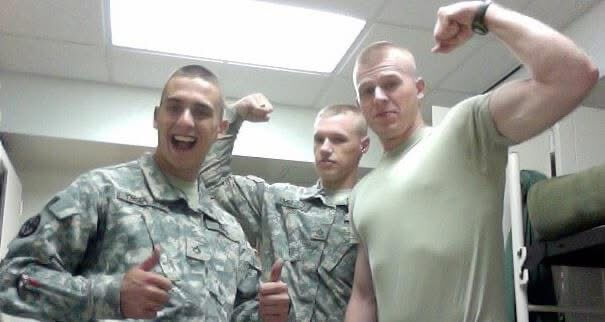

Josh said from what he’s seen reported, what is right is that his America is actually fighting back against a regime that has targeted, harassed and killed so many of its own.
“But, [I’m] not so happy to see that we’re gearing up for another war again,” he said.
Marty deployed three times to Iraq and twice to Afghanistan over his eight years as an Army Ranger with 1st Battalion, 75th Ranger Regiment.
“I spent my third deployment on a counter Iranian Task Force and saw kind of firsthand the types of things that Iran was doing in Iraq to harm American troops,” Marty said. “I saw the proliferation of copper-plated EFPs [explosively formed penetrators] and how damaging that was … if I would have been in the Stryker that I was in that deployment one more night, I would have had a copper-plated EFP right through my chest.”
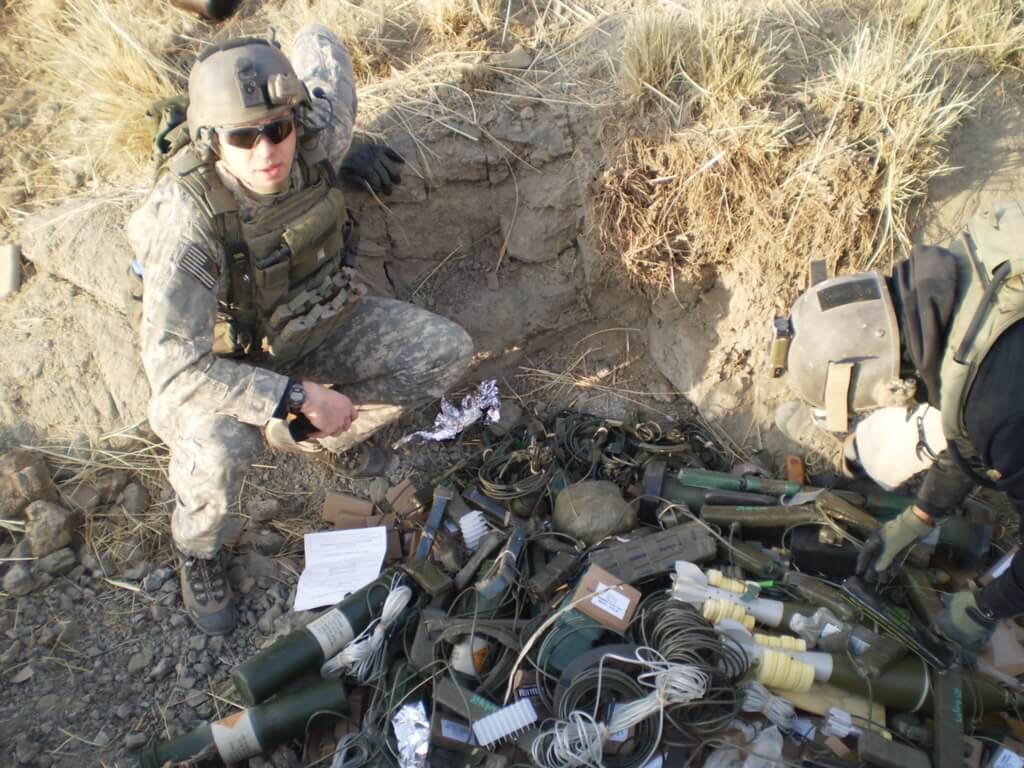

He explained that he is not losing sleep for the Ayatollah being killed or when Soleimani was killed in 2020, “because those guys, they were bad people.”
“They were bad for the Iranian people or the Persian people, and they’re bad for the world, and they’re responsible for a lot of American deaths and the deaths of innocent Iranians,” he said. “I’m not losing a lot of sleep over that.”
What Marty does lose sleep over is seeing American service members killed in the Middle East again.
“This is where it becomes a conflicting thing,” he said. “What are we getting ourselves into? Is there an end state? I haven’t seen any stated goals that are like, ‘Hey, what’s our mission success criteria, and what’s the timeline for that?’”
He and several veterans who have been in the fight want to understand a reason, and ensure America doesn’t enter into another 20-year war.
“’What do I think about America’s involvement in the war? Well, I think we should win,’ That sums it up the best for me,” Governale said, quoting a character from the 1987 war film, “Full Metal Jacket.”
The role of reserve forces
Evans is the founder of Friendly Forces, a nonprofit connecting military reservists with employers who recognize their unique skills and contributions. He first started his career in the National Guard and later moved to the reserve side.
“It makes me think about, ‘Is this going to turn into a much bigger conflict that I’m going to be pulled into? And if so, what’s that going to look like?’” Evans said.
Evans added that patience for the reserve units who are activated is how companies and corporations can support those currently deployed or slated to in the future.
He said his nonprofit is meant to hold accountable employers that claim to support veterans but offer little real backing to Guard and reserve employees when they deploy.
“A company, especially if they want the social credit of caring about the military, just caring about their reservists, there’s plenty of things they can do … I mean, legally, they have to hold your job,” Evans said. “My big thing is, provide some kind of support so that me and my family aren’t in sort of the financial hole on top of the fact that I may get hurt or killed. So make sure we continue to pay our bills, if nothing else.”
Support
Marty and Governale have found community through their social media channels, connecting with fellow veterans on stories and posts. Evans added that memes help veterans process the situations through humor.
“Sometimes the best, easiest way to package, boil down some of these things, is through a single picture that is able to sum up the problem and the feelings people are having in a humorous way,” Evans said. “That kind of allows you to laugh instead of cry, I suppose.”
Shared sentiment on ways to support those deployed or slated to deploy in the future were to send care packages, but Marty also noted that communication is as easy as it’s ever been. He encouraged sending well wishes to those deployed, and for Americans to let them know they’re rooting for them.
“Support the people that are tasked with doing this and hope that they succeed while holding your politicians and elected leaders accountable for the decisions that they make,” Marty said. “Both can be true.”