


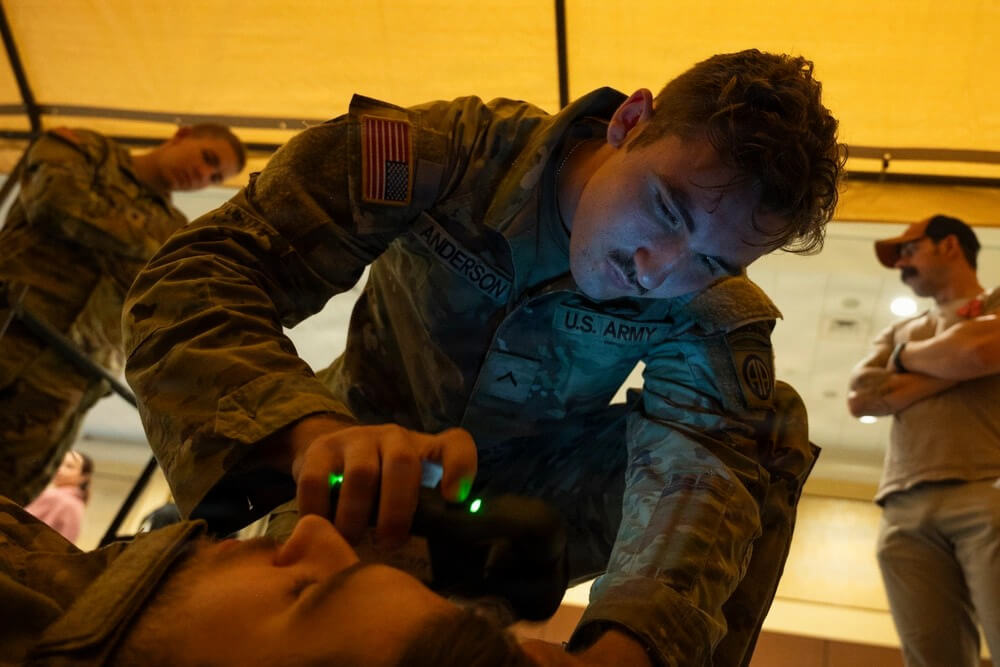
A military-centered nonprofit is bringing awareness to “one of the most immediate risks facing American service members” in modern warfare: blast wave brain injuries.
Differing from “normal” concussions or other visible head wounds derived from blunt trauma, blast wave brain injuries result when supersonic shock waves from explosions or powerful weapons like drones invisibly beam through skulls and harm delicate brain tissues. The effects are still being studied and vary widely, but neurologists say the consensus — that exposure to these types of waves, especially when repeated, can only result in negative neurological outcomes — is clear.
And that’s why experts from the Invisible Wounds Foundation, an organization focused on military brain injuries, are demanding renewed attention as hostilities continue to escalate in Iran.

























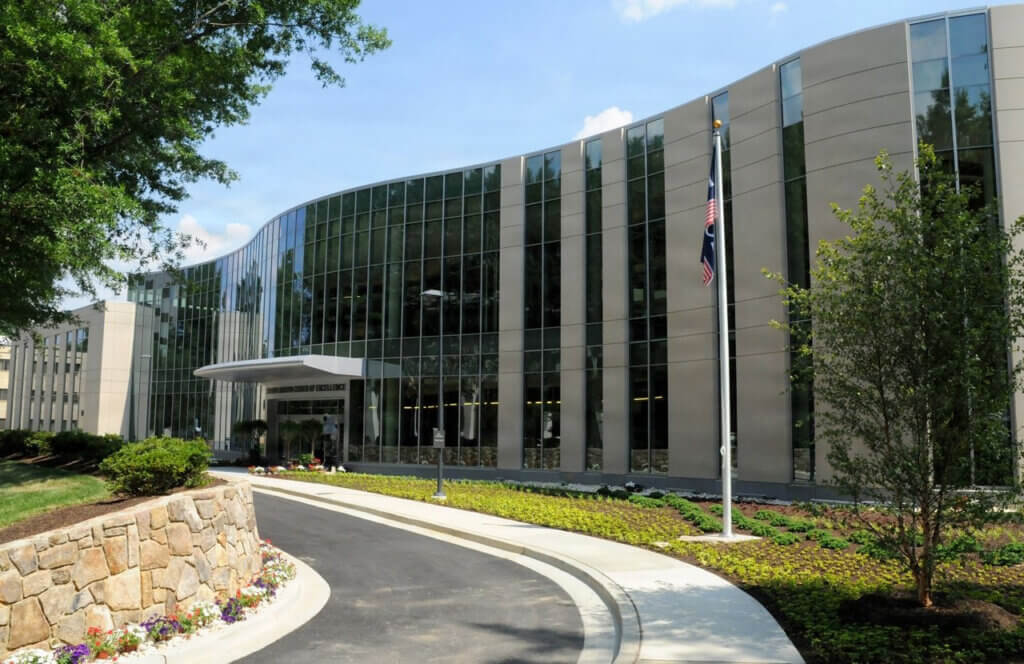
“It’s a very complex problem, and we’re still learning a lot,” said Dr. Jim Kelly, the foundation’s chief medical scientist and founding director of the National Intrepid Center of Excellence (NICoE) at Walter Reed National Military Medical Center in Maryland. “It’s not as mysterious as it used to be, but we’ve been missing the boat for a long time.”

Among other goals, Kelly and his colleagues aim to raise awareness amongst the medical, government, military and civilian communities about what these kinds of injuries do to human bodies — especially as Operation Epic Fury continues. The current conflict in Iran, according to DOW statistics, has resulted in 18 American fatalities and more than 400 wounded, many with traumatic brain injuries (TBIs) from blast waves. The increasing reliance on from-every-angle drones, the doctor said, has only exacerbated the injurious possibilities.
Kelly, an Air Force father, said that blast waves are often accompanied by typical war-caused brain injuries like shrapnel wounds. Symptoms — including insomnia, depression, irritability or mood swings, substance abuse, personality changes and suicidal ideation — commonly overlap with diagnoses like PTSD and other psychiatric labels. Add in the fact that there is no easy diagnostic test for TBIs from blast waves, and the overall picture is murky. What many assume to be a problem of the mind or mettle, in other words, might actually be a brain injury instead.
“We’re getting there, but it’s imperfect. We in the scientific community are still looking for a multimodality approach to diagnose much earlier, with cognition testing, imaging, eye movement, all of that,” Kelly said, noting testing abilities at places like NICoE. “But we have yet to find a way to do it in the field, to make it useful for service members in austere environments.”
Staff at the Invisible Wounds Foundation are determined to change that limit, including Shannon Connell, its CEO and founder.
“One of the biggest issues facing our military and veterans today is the tremendous number who have been diagnosed with a TBI — more than 550,000 since 2001 — but probably three to four times that many have gone undiagnosed,” said Connell, a Navy SEAL mom. “And we want to get a diagnosis much earlier in the service member’s career so we can get them into early treatment and intervention. It’s what they deserve.”
The foundation brings together the world’s premiere researchers, clinicians, industry leaders, government agencies, policymakers and donors in order to hopefully create a conclusive diagnostic test for blast wave injuries, among other advances. Connell is also actively pushing for baseline brain tests and imaging to become standard protocol for all military members from enlisting or commissioning onward.
“That way, we know what we’re dealing with from the very beginning,” she said. “If we saw a significant injury to our arm or leg, we’d say, ‘I need to take care of that,’ but because we can’t see these brain injuries right now, we’re not paying enough attention — which just compounds everything until it’s late in the game.”
Kelly believes that modifying military training regimens exposing troops to blasts would have a huge preventative impact. Connell, meanwhile, estimates a three- to five-year timeframe for some type of early diagnostic blast wave injury test. She even dreams of a future pill or patch that would protect the user from TBIs. She and Kelly want to be part of those breakthroughs.
“The idea that we cannot solve this problem of TBIs, including blast wave injuries, is unacceptable,” she said. “For the service members, the families, the children, the parents — it’s unacceptable to think that we’re not going to put our resources toward caring for our warfighters’ brains. We can do better and someday, we will.”