


About 300 Air Guardsmen returned to Colorado this summer, weary from an extended, high-intensity training deployment to Japan. More tired, though, were the aircraft that returned alongside them.
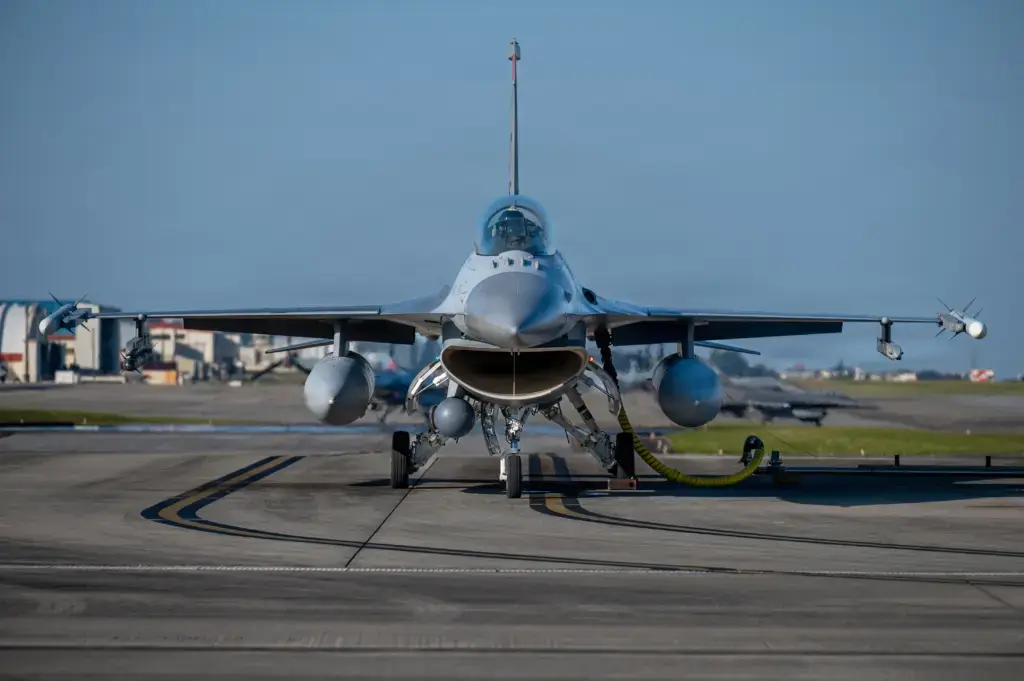
The 12 F-16 Fighting Falcons that accompanied the Colorado Guard’s 140th Wing are pushing 40, older than many of the airmen who fly and maintain them.
“We’re kind of getting to the end of our capability,” said Lt. Col. Frank Prokop, 120th Fighter Squadron commander, during a Sep. 3 media roundtable. “We’ve maxed it out. We’ve played the perfect game.”



























During the recent deployment, stretching from January to June, the 140th Wing and its 120th Fighter Squadron participated in a Pacific Command regional training mission. Flying out of Kadena Air Base on Okinawa, the squadron’s fighter pilots took to the skies beside Marines, Kadena’s 18th Wing, and allied forces across the Indo-Pacific region. The deployment, which was extended nearly two months by considerations surrounding Epic Fury, was epic training by Colorado Guard accounts.
“It was an eye-watering, outstanding deployment,” said Prokop.
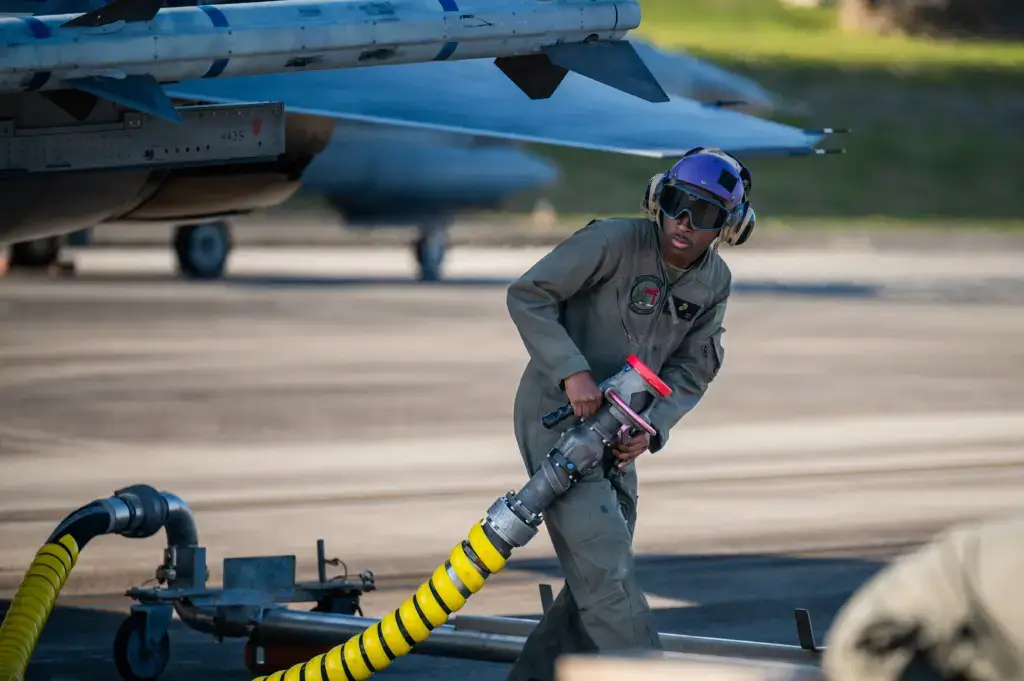

Colorado air crews gained prolonged, invaluable exposure to complex flight operations, from training to take on chemical attacks and conducting mass airlift operations to long-distance flight maintenance, such as the rapid replacement of tires and munitions support in shifting environments.
“(The training) demonstrated how joint air power operates in a high-tempo environment,” said Prokop.
The jets that accompanied the Wing, Block 30 F-16 fighter jets, are fourth-generation fighters, and as Wing leadership is quick to point out, performed admirably. But they’re also old.
The aircraft were built in the late ‘80s, around the time President Ronald Reagan was leaving office. Even with upgrades, such as modern radar and data-sharing systems, they can’t be expected to fly close to enemy lines and emerge unscathed, like their stealth counterparts.
“We can’t get nearly as close to surface-to-air threats or air threats posed by China … as some of the newer models,” said Prokop.
Moreover, the maintenance required on a four-decade-old fighter aircraft is substantial. What once took a maintenance crew an hour can take three on the older F-16s, said Wing leadership.
“(The jets originally needed) six to eight maintenance man hours per flight hour,” said Wing Commander Col. Christopher “KojaCk” Melka. Now, he added, “our maintainers are averaging 15 to 20 hours of maintenance man-hours for every hour of flight.”
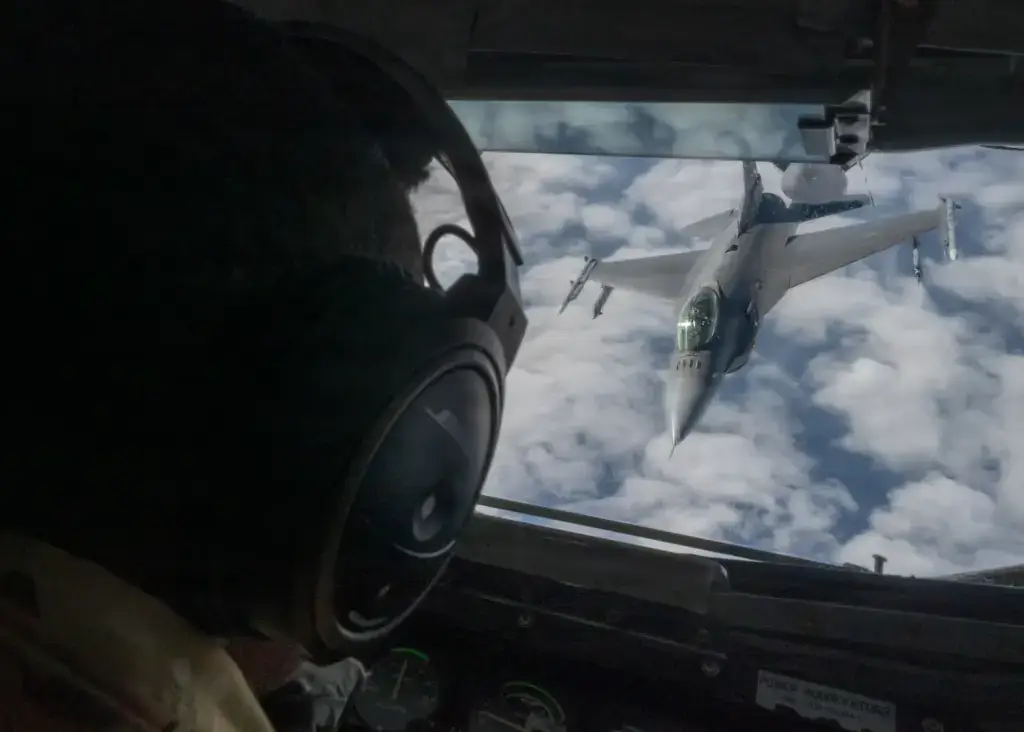
Squadron, part of the Colorado Air National Guard’s 140th Wing, conducts aerial
refueling with a KC-135 Stratotanker over the Pacific Ocean during a deployment to
Kadena Air Base, Okinawa, Japan, Jan. 29, 2026. Photo by Staff Sgt. Gary Hilton/DVIDS
The bigger fight might be staying in the air at all.
At present, more than half of the nation’s Air National Guard units don’t have plans to welcome new jets, and the newer fighters the Air Force does purchase usually head to active-duty units, not reserve components like the Colorado Guard.
Colorado’s senior elected officials are thick in the fight to keep a flying mission for the 140th Wing. Emphasizing that Guard units make up about a third of the Air Force’s combat capabilities and play a central role in defending U.S. airspace from outside threats, they’ve engaged in a longstanding effort to attract newer aircraft to the unit.
“It’s a wing that has rapidly aging aircraft,” said Rep. Jason Crow, D-Colorado, in a June 2025 interview with Colorado Public Radio. “There are currently no plans to replace those aircraft when they leave their viable flying time, which would phase that fighter wing out.”
As far back as 2021, Crow joined U.S. Sens. John Hickenlooper, D-Colorado, and Michael Bennet, D-Colorado, in writing then-Air Force Secretary Frank Kendall that the Wing’s 120th Fighter Squadron is a “critical national security asset … home to the only aerospace control alert mission in the central United States.”
The Wing is hopeful new jets are on the horizon. Not only would they be good for the state — the unit brings about 1,200 jobs to the area and plays a central role in responding to wildfires and floods — but also for the security of the nation.
“(It) isn’t just about getting new planes,” said Melka. “It’s about securing our nation’s defense, protecting our state, and ensuring the 140th Wing can continue its more than 100-year legacy.”