


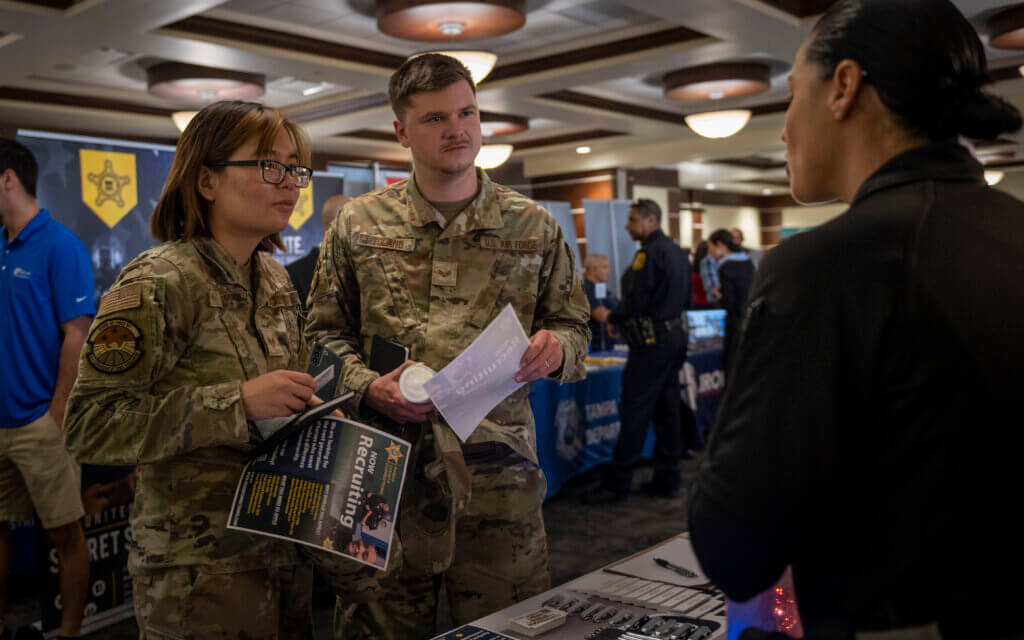
As a young staff officer at the Pentagon years ago, I often helped coordinate a letter we called the “do’s and don’ts” memo to provide concise and upfront guidance on how to proceed in a specific situation. The same approach can be applied to search for a job, the search for a better job, and developing a plan to improve skills to continue building a progressive career. (Ultimately a career that complements part-time military service in the reserve and guard or as the spouse of a drilling member in our Armed Forces.)
As a former adjutant general and assistant adjutant general, it was very clear to me that solid employment, especially for our drilling members and their spouses, was essential to retaining talent, building a resilient military family, and delivering the military readiness that the nation counts on the reserve and the guard for every day.
In my current position at VetJobs and Military Spouse Jobs, I’ve seen several trends, both good and bad, that have helped me understand the ins and outs of pursuing employment for our military community. I’d like to share some of those things with you in hopes that it can help you make the path smoother and alleviate the anxiety of being unemployed or underemployed.















Let’s start with the “do’s:”
Self-reflection: Conduct an honest internal AAR. What do you actually enjoy? Identify where your passions meet your proven skills before you start applying.
Start early: Do not wait for a financial crisis. The civilian hiring cycle is often longer than anticipated; build your foundation now to avoid rushing the process.
Ask for support: Use employment experts at organizations like VetJobs or Military Spouse Jobs. They know the current job market and the tools required to win.
Top off your credentials: Sometimes the difference between “qualified” and “selected” is a single certification. Identify the gaps and fill them with a targeted credential.
Customization: One resume does not fit all missions. Tailor your resume and cover letter to the specific job. Show the employer you want their job, not just any job.
Rehearse: Practice interviewing out loud. If you haven’t socialized your “elevator pitch” or answered “Tell me about yourself” in front of another person, you aren’t ready for the actual interview.
The “don’t” list:
Don’t over-index on history: You don’t need to list every ribbon or duty station. Employers already respect your service; they need to know how you can solve their specific problems today.
Don’t speak “military:” Jargon is a barrier. If you can’t translate “NCOIC of the S-3 shop” into “operations manager for a 500-person organization,” you’ll lose your audience. Keep the “green-speak” for the VFW. Pivot to plain-speak as quickly as possible.
Don’t expect a “one and done:” Your career is a living document. It’s a journey of progression that requires constant adjustment. Stay agile as your military and civilian lives evolve.
Final thought: Effectively manage your finances. Financial discipline is the “logistics” of career hunting; when your personal books are in order, you have the tactical patience to wait for the right opportunity rather than the first one.